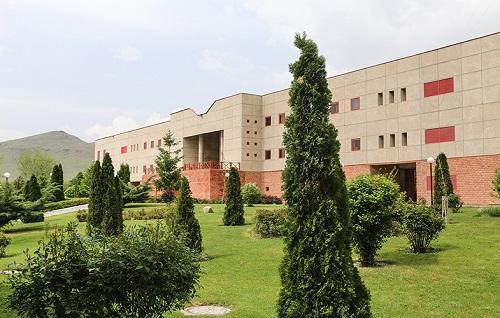
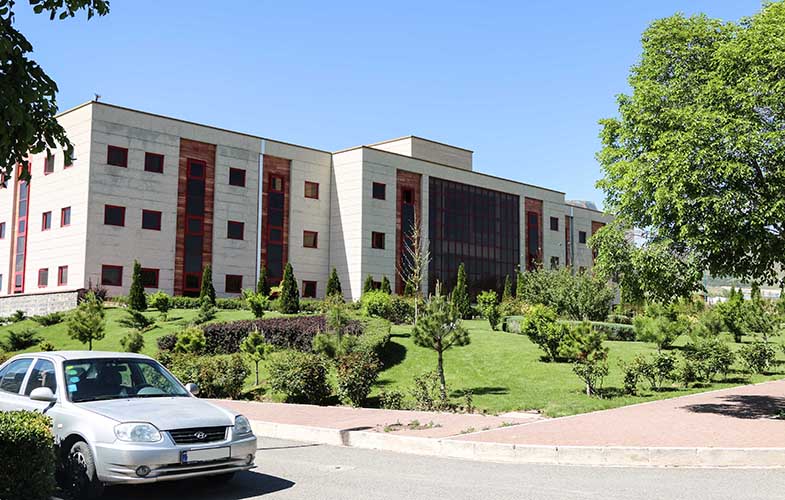
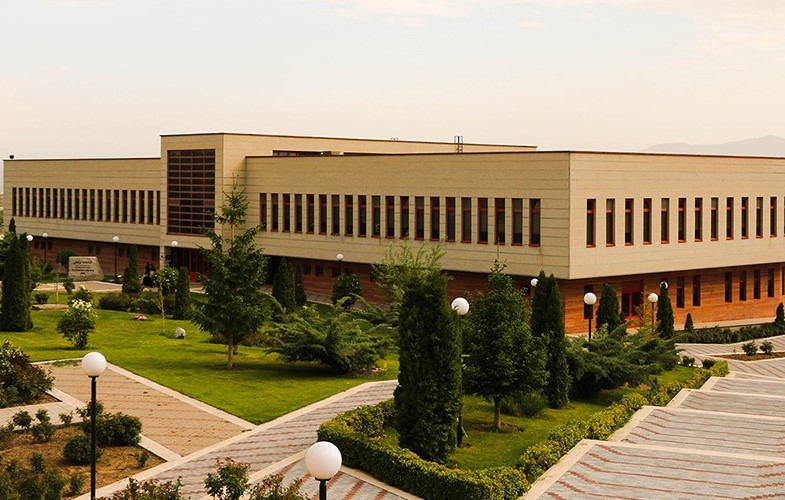
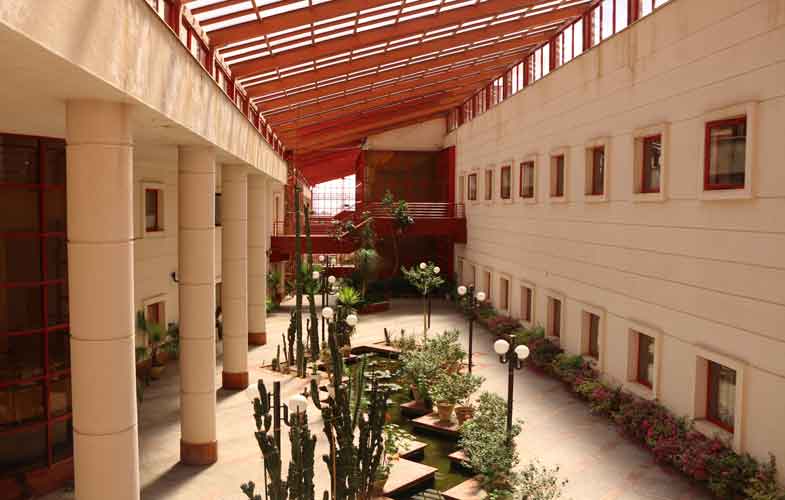
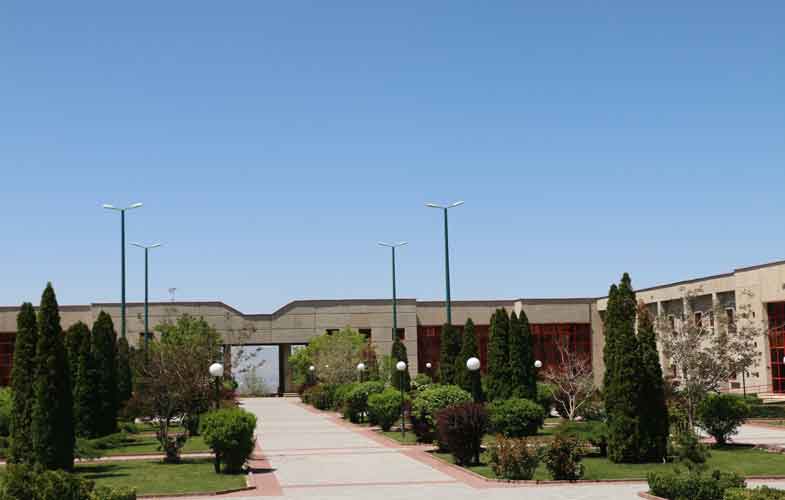
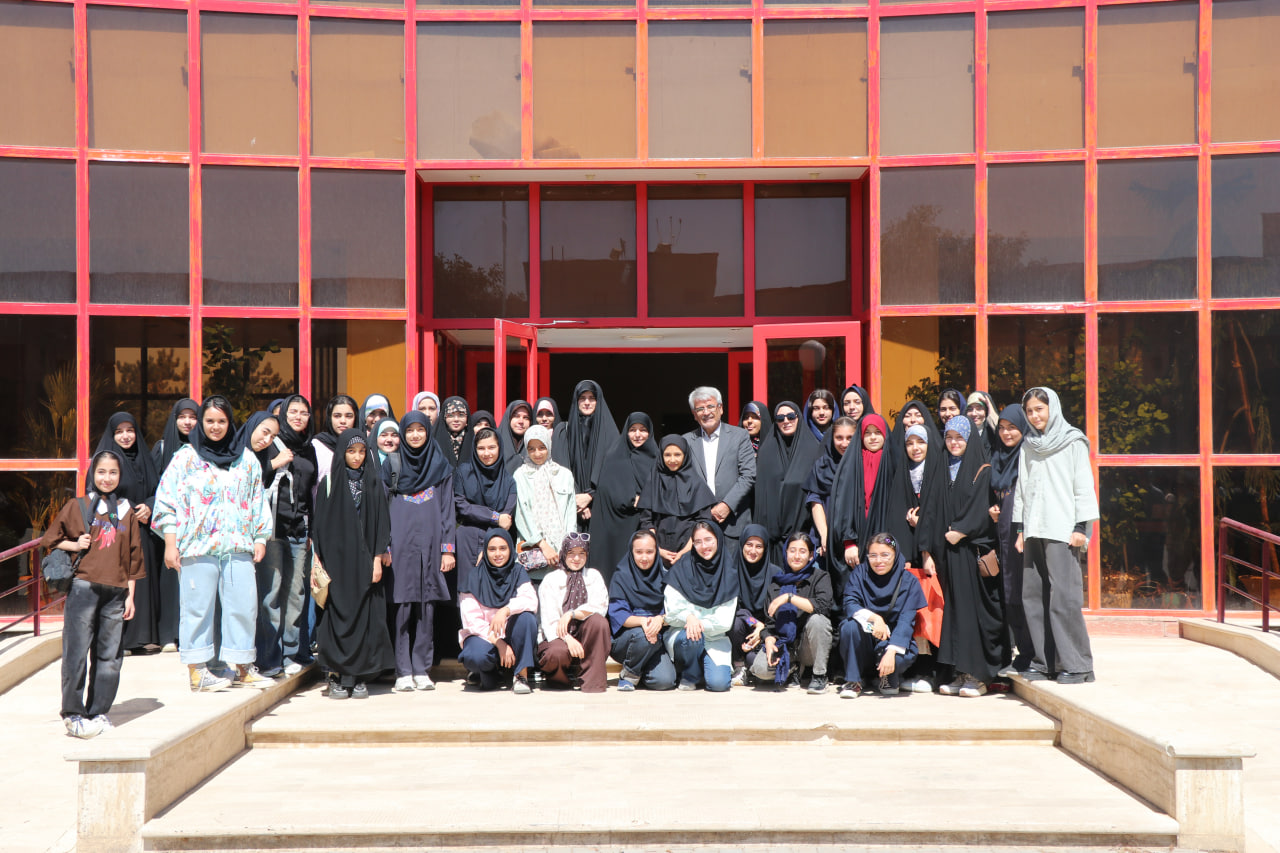
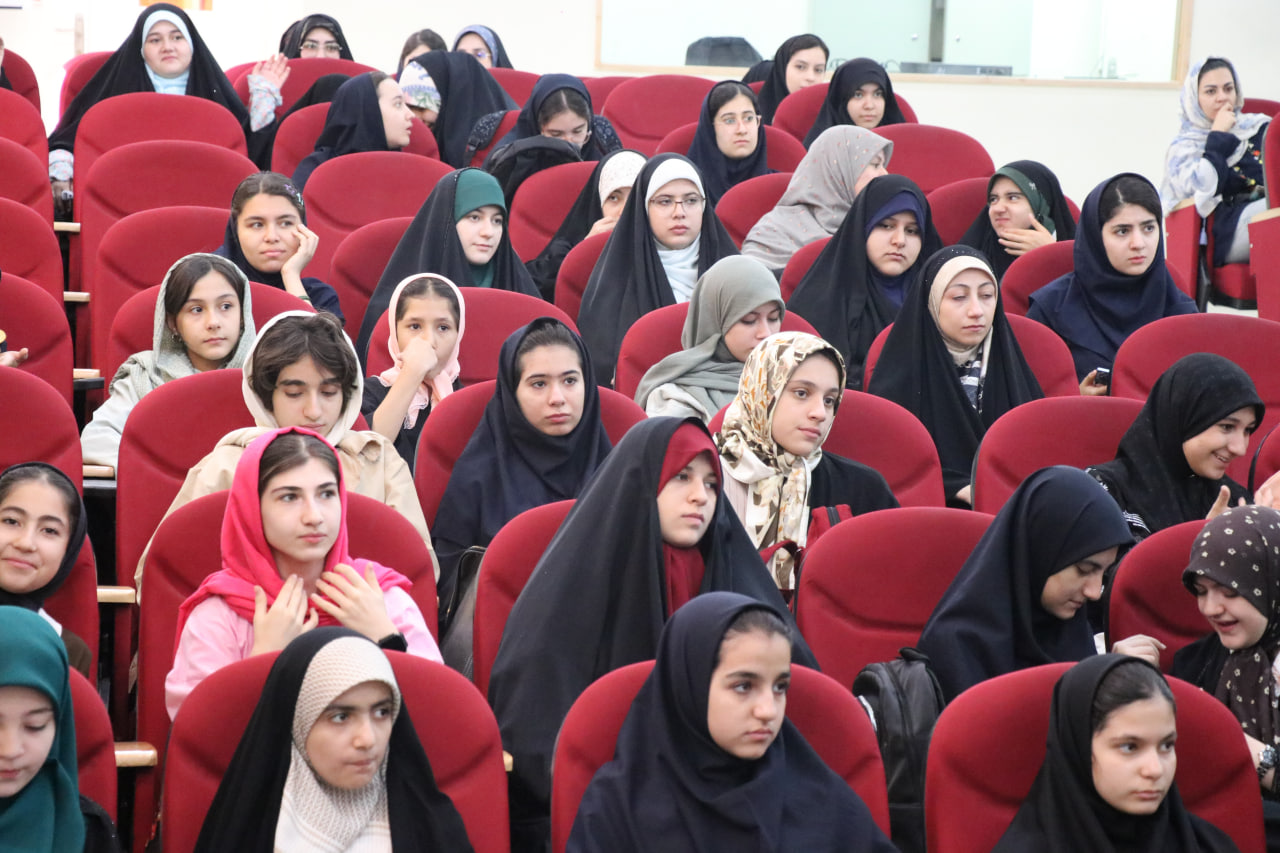
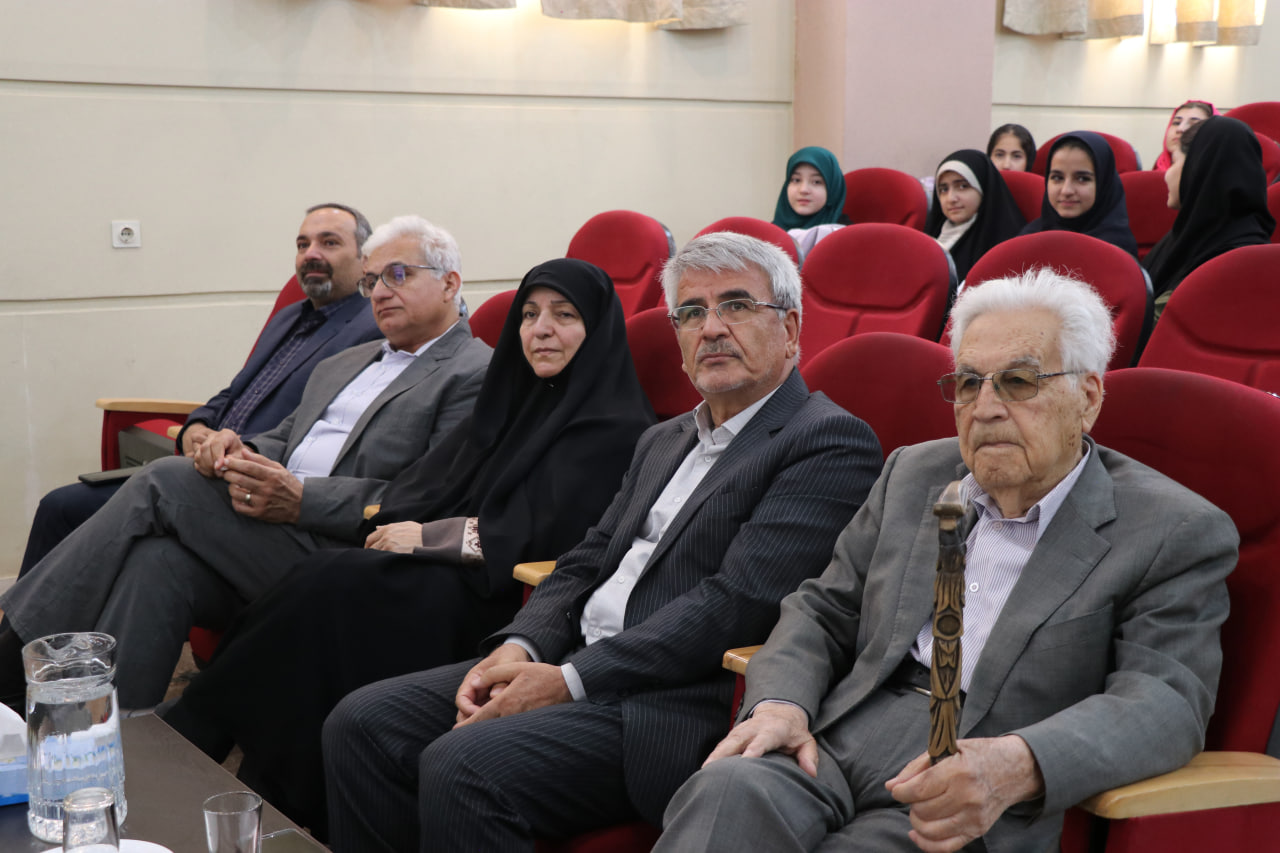
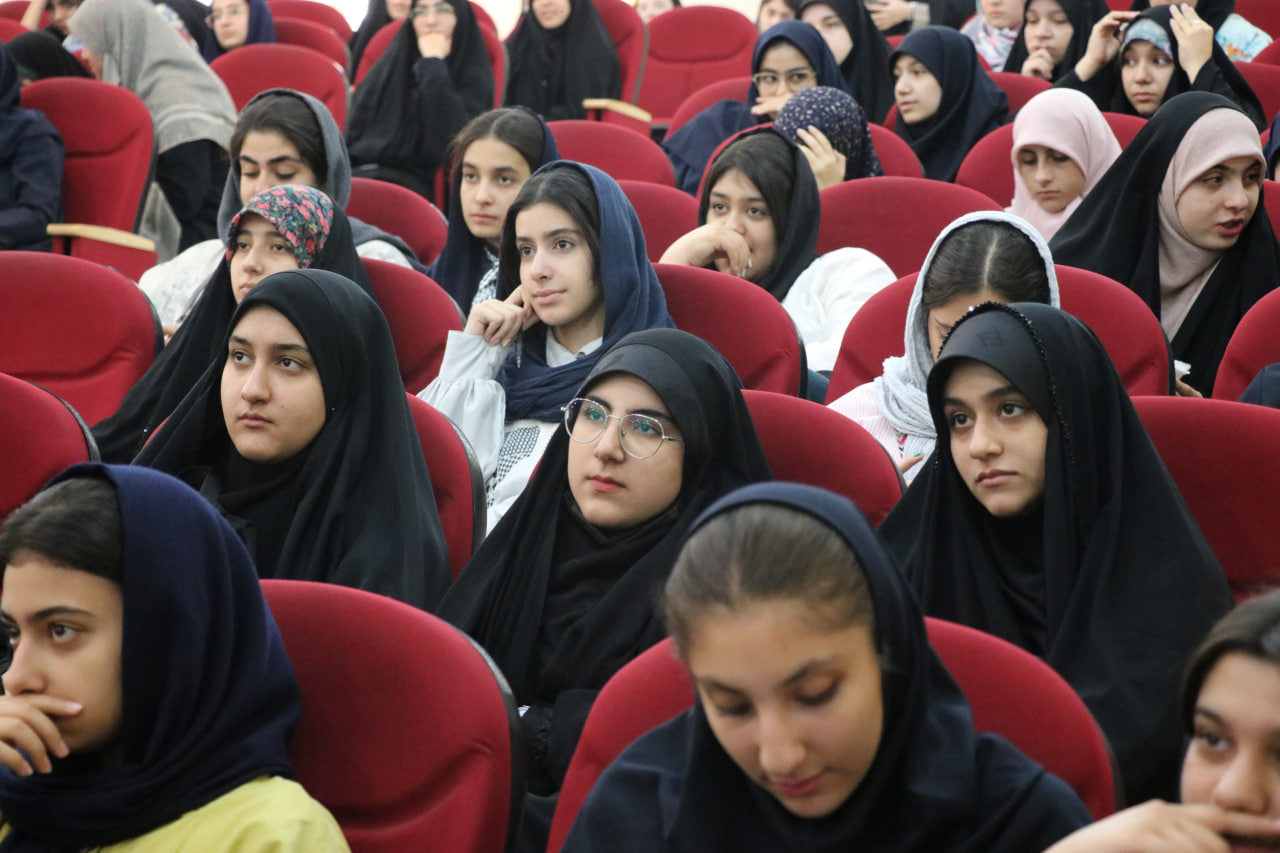
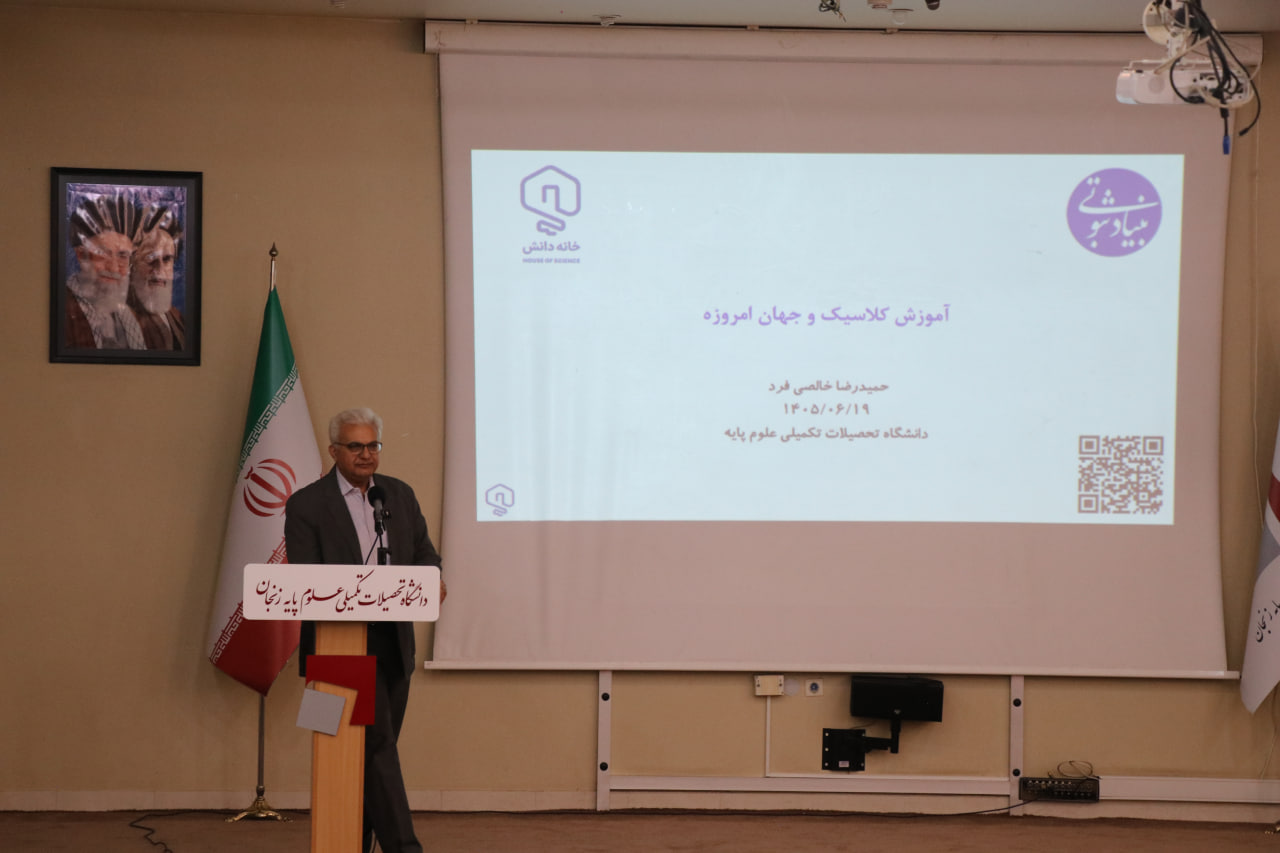
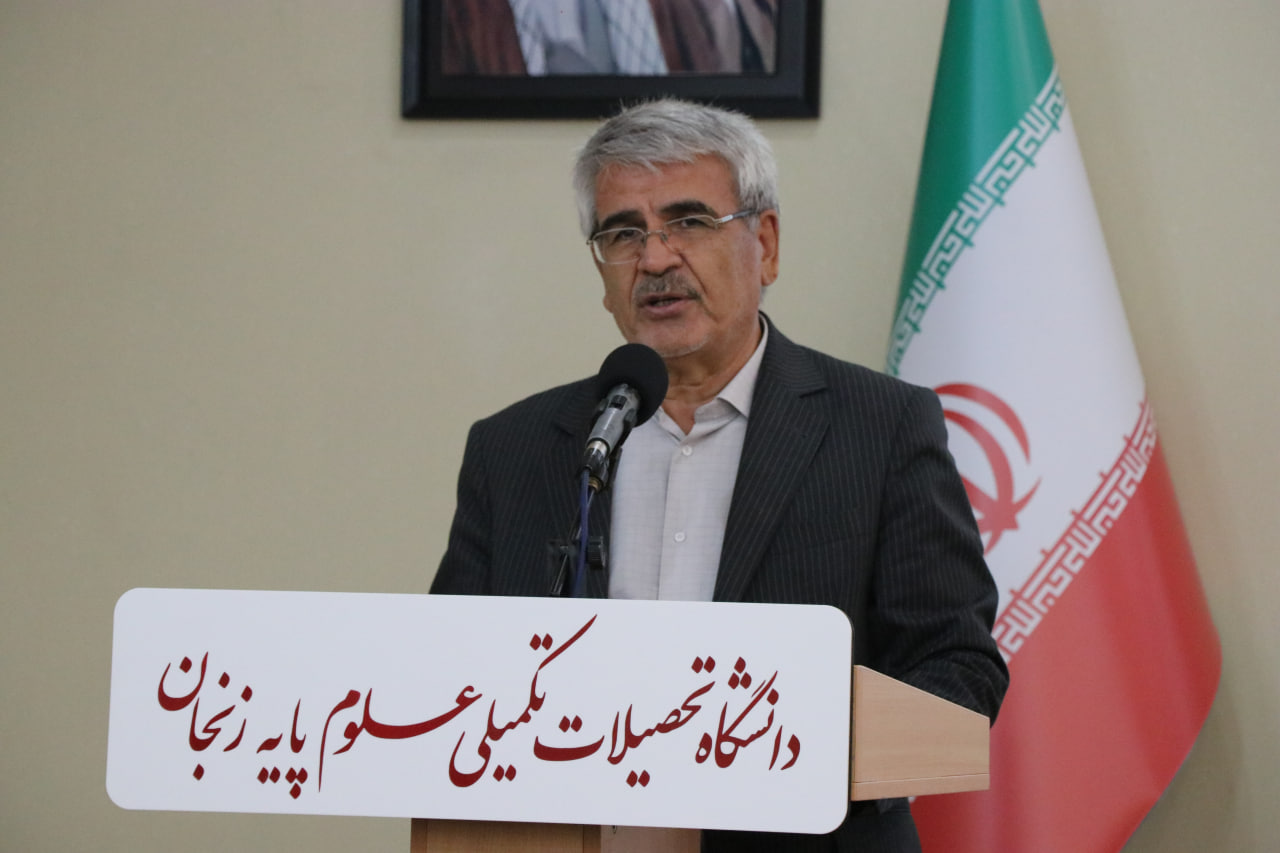
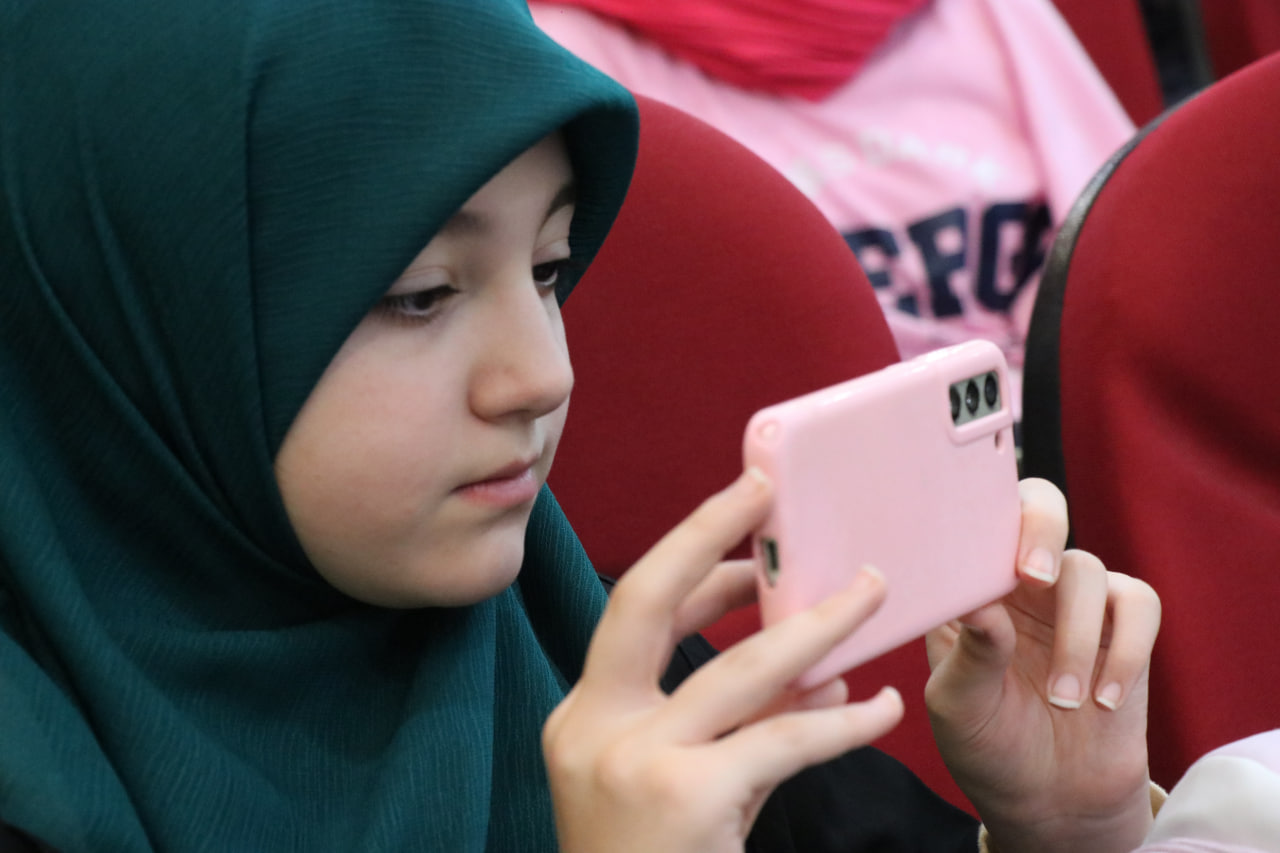
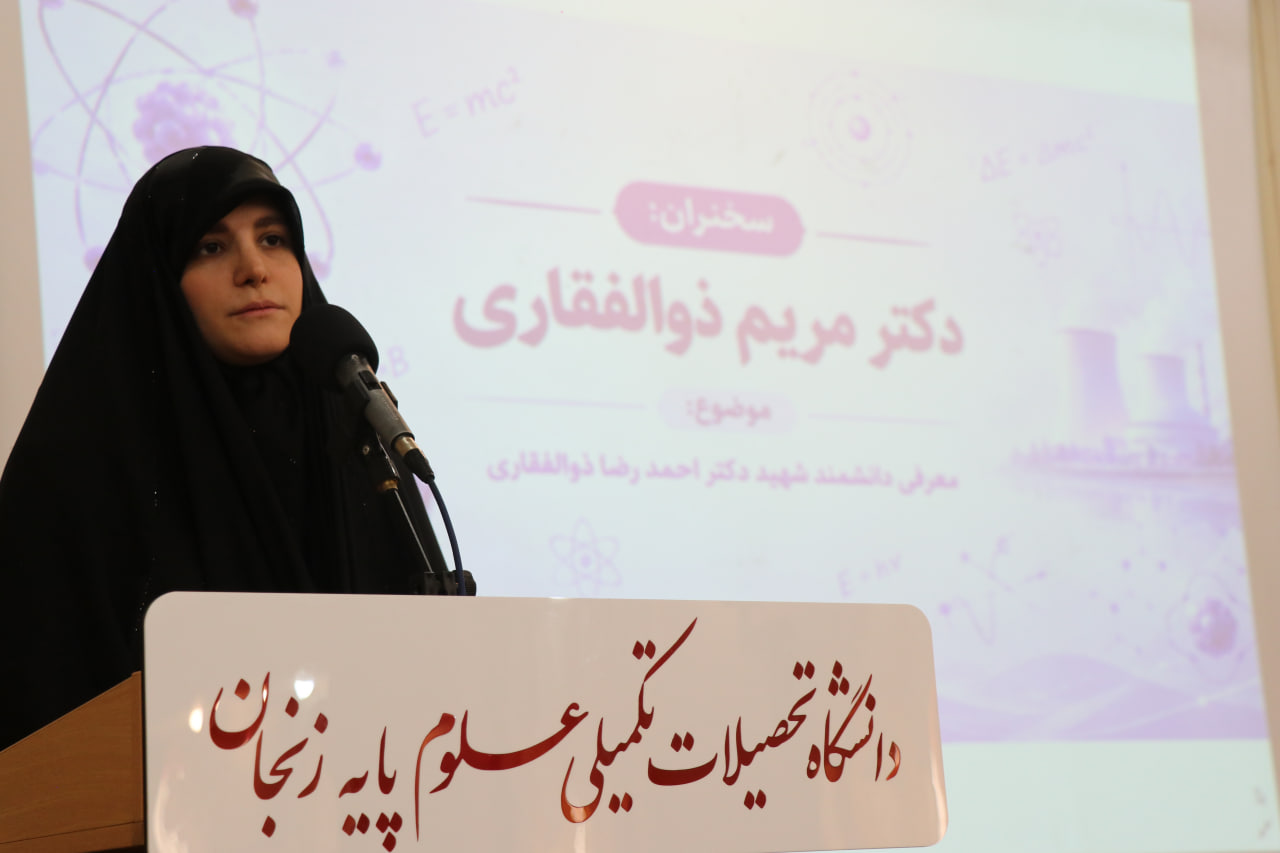
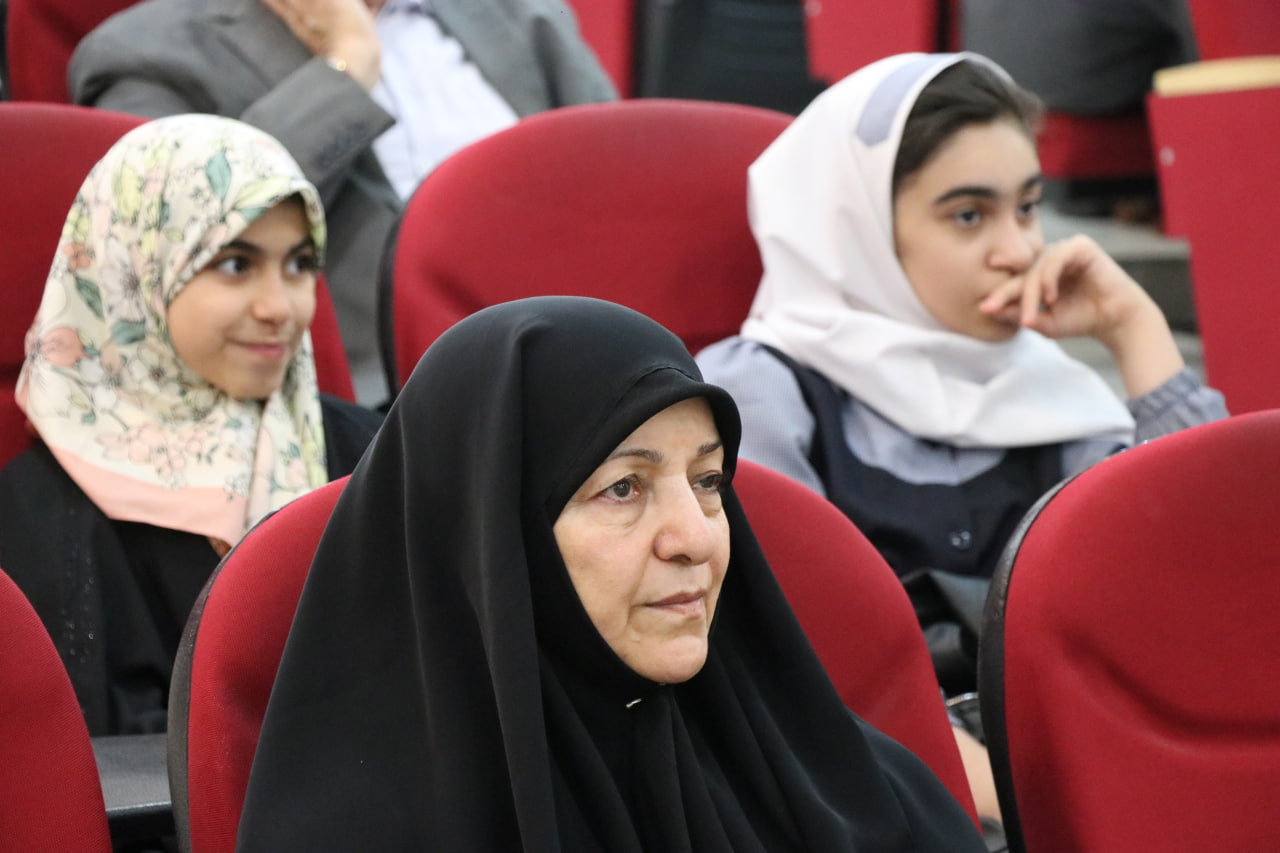
The Institute for Advanced Studies in Basic Sciences (IASBS) has hosted a different kind of day for the next generation through a scientific and recreational camp organised by the Shahid Beheshti Scientific and Educational Group. The camp brought together pupils, university lecturers, and scientific figures, including the university’s founder, Prof Yousef Sobouti; the IASBS President, Prof Sadollah Nasiri Gheydari; the wife of the martyred scientist, Dr Majid Shahriari, Dr Behjat Ghasemi; and the daughter of the martyred scientist, Dr Ahmadreza Zolfaghari, Dr Maryam Zolfaghari, and the university’s physics lecturer, Prof Hamidreza Khalasi-Fard. The programme presented science, ethics, and the experiences of the country’s scientific community through dialogue with the younger generation.
The university belongs to its students today and to the next generation tomorrow
At the beginning of the programme, the IASBS President welcomed those attending and described the presence of the families of martyred scientists as a valuable opportunity to engage with the younger generation and convey scientific and human experiences.
He stressed the university’s responsibility towards the next generation, saying: “We academics are duty-bound to co-operate with the Ministry of Education as much as we can, because the university belongs to its students today, and to you tomorrow.”
The IASBS President also encouraged the pupils to continue their education and make use of the country’s scientific capacities. Referring to the university’s approach since its establishment, he stressed the importance of the quality of education and research. He described the university’s limited capacity as consistent with its mission of providing high-quality education and research, and recalled the role played by the university’s founder in shaping this approach.
The IASBS President also made reference to the Science House, which hosts around 4,000 to 5,000 pupils each year and enables them to gain direct experience of scientific and laboratory activities. He also highlighted the role of benefactors in developing the university’s educational, scientific, and welfare infrastructure.
Science alongside ethics and responsibility
Another part of the IASBS President’s remarks was devoted to the country’s martyred scientists. Referring to the martyred scientist Dr Majid Shahriari, the martyred scientist Dr Ahmadreza Zolfaghari, and other martyred scientists, he stressed the lasting memory and impact of people who had devoted their lives to serving society and advancing it.
He also recalled his memories of the martyred scientist, Dr Seyyed Amirhossein Faghihi, speaking about his scientific, ethical, and managerial standing. He referred to the scientist’s extensive scientific activities in radiopharmaceuticals, nuclear medicine, and nuclear applications. According to the IASBS President, the publication of more than 150 international papers, the writing and translation of seven books, and the supervision of more than 100 theses and dissertations formed part of the martyred scientist’s scientific record. His calmness, modesty, patience, and kindness, however, were among the qualities that set him apart alongside his scientific ability.
Ethics as an inseparable part of science
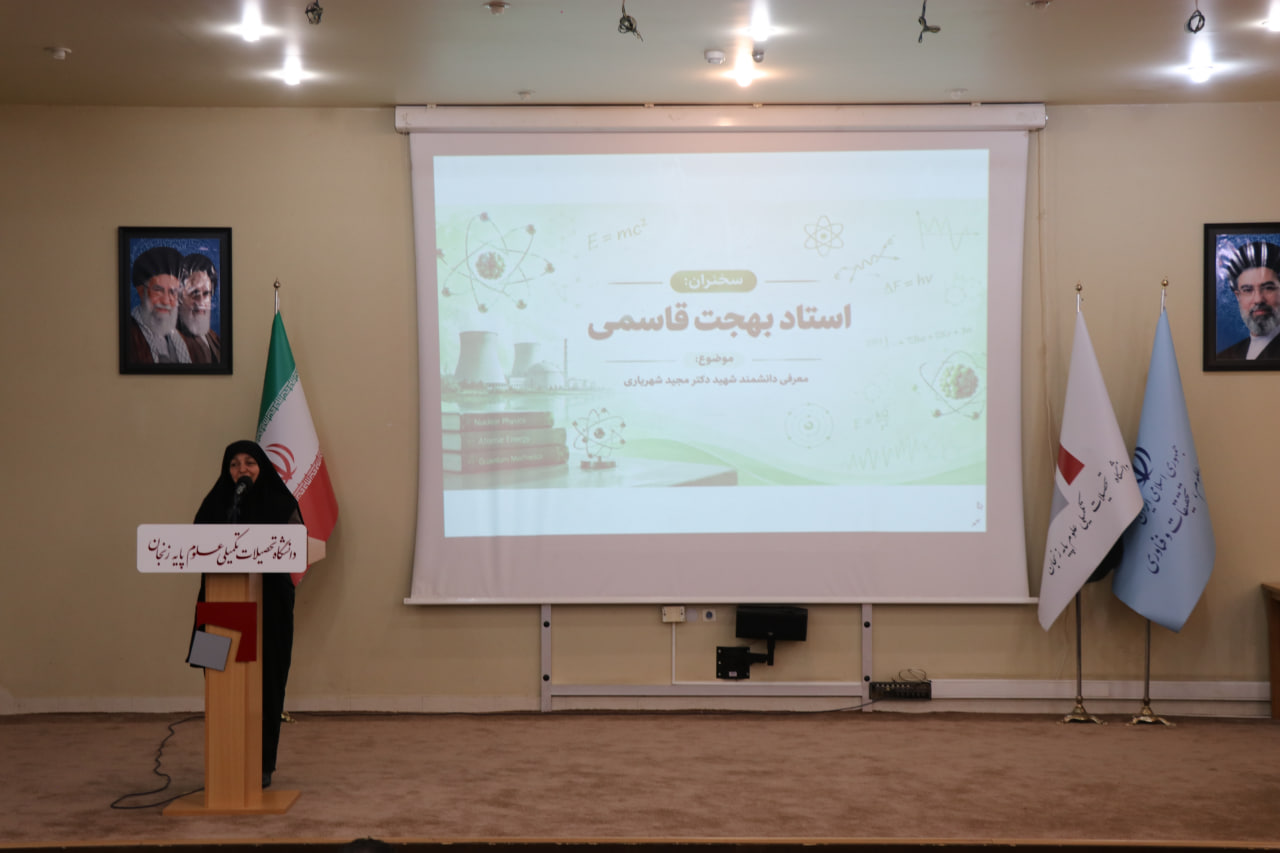
The wife of the martyred scientist, Dr Majid Shahriari, Dr Behjat Ghasemi, then stressed the importance of ethics in science and technology, recalling memories of the martyred scientist and the country’s scientific community.
Referring to an assessment process among basic-science associations, she said that the university’s founder, Prof Yousef Sobouti, and the martyred scientist, Dr Ahmadreza Zolfaghari, had been identified as two leading figures in ethics in science and technology.
Dr Ghasemi also recalled the martyred scientist’s wide-ranging scientific interests and described his enthusiasm for learning across different scientific fields as an example of his deep and enquiring outlook.
The scientific path should be accompanied by impact
The daughter of the martyred scientist, Dr Ahmadreza Zolfaghari, Dr Maryam Zolfaghari, also recalled memories of her father and stressed the importance of making informed choices about one’s personal and scientific path.
She said that the martyred scientist did not regard the choice of a field of study and life path as dependent solely on the title or ranking of a discipline. Rather, he believed that society’s and the country’s needs should be understood and that a path should be chosen in which it was possible to make a greater impact.
Dr Zolfaghari also stressed the importance of effort, perseverance, having suitable role models, and choosing good friends. She called on pupils, alongside their studies, to set aside time to reflect on their goals, beliefs, and future path in life.
From a physics lesson to the need for scientific independence
The university’s founder, Prof Yousef Sobouti, began his remarks by giving a short physics lesson. Reviewing concepts including Newtonian gravitation, Coulomb’s law, the uncertainty principle, Planck’s constant, and the Schrödinger equation, he introduced the pupils to the difference between classical laws and quantum mechanics.
He went on to describe in-depth scientific education as a prerequisite for the country’s scientific and technological independence. He stressed that dependence on imported technology would decline when the knowledge and scientific principles behind that technology were properly understood.
The university’s founder stressed the need for in-depth learning and the acquisition of expertise, saying that the country’s progress depended on education, research, and the training of scientists capable of playing a role at the forefront of global knowledge.
The scientific and recreational camp ultimately became an opportunity for the younger generation to engage in dialogue with university lecturers and the families of martyred scientists. By combining accounts of the lives and characters of martyred scientists with scientific education and an emphasis on ethics, responsibility, and in-depth learning, the programme offered a picture of the path ahead for the next generation in science and the country’s progress.
Sun, 13 Sep 2026
Developed by the IASBS Computer Centre
IP Address:[216.73.217.79] Browser: Mozilla/5.0 AppleWebKit/537.36 (KHTML, like Gecko; compatible; ClaudeBot/1.0; +claudebot@anthropic.com)